A hydraulic power pack is the self-contained unit — motor, pump, reservoir, valves, and controls — that generates and regulates pressurized fluid for a hydraulic system. Choosing the right type comes down to three variables: what drives the pump, how the unit rejects heat, and what duty the equipment it feeds actually demands.
Every power pack, regardless of type, combines the same core elements: a motor or other drive source, a pump that converts that mechanical input into hydraulic flow, a reservoir sized to the system’s oil volume and heat-dissipation needs, directional and pressure-control valves, and a cooling arrangement to keep operating temperature within range. What changes between power pack types is which of those elements gets swapped or reconfigured for a specific application — not the basic architecture.
The Three Variables That Actually Decide Which Type You Need
Most buying guides jump straight into gear, vane, and piston pump theory. That’s a real distinction, but it’s not usually the first decision a buyer needs to make. Three questions come first:
- What’s driving the pump — electricity, or something else? Site infrastructure and environment decide this before pump type even enters the conversation.
- How does the unit shed heat? Cooling method affects footprint, duty cycle tolerance, and maintenance.
- Is the equipment it feeds a generic industrial application, or a specific duty class with its own demands — like steelmaking, where thermal load and continuous-duty reliability change what”adequate” cooling and control actually mean?
Air-Driven Power Units: When Compressed Air Beats an Electric Motor
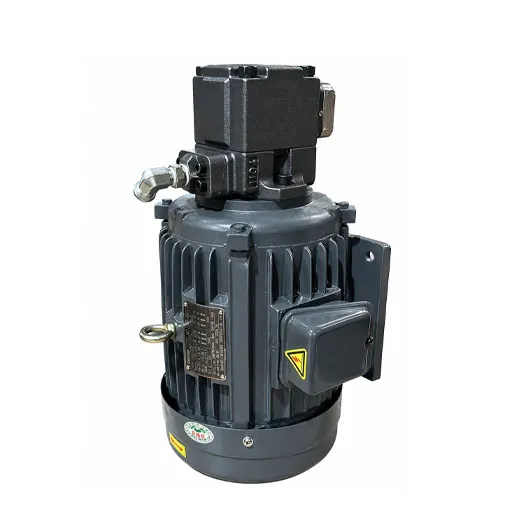
An air-driven hydraulic power unit converts compressed-air energy into hydraulic pressure instead of running off an electric motor. That matters in two situations: sites where compressed air is already the available utility and running new electrical service is impractical, and environments where electrical equipment introduces an ignition risk that compressed-air drive avoids. Outside those situations, an electric-driven unit is usually the simpler, lower-maintenance choice — air-driven units aren’t a universal upgrade, they solve a specific infrastructure or safety constraint.
Cooling Method: What Air-Cooled Actually Changes
An air-cooled hydraulic power unit rejects heat through an air-cooled heat exchanger rather than relying on a separate water-cooling loop. That removes the need for a water supply and drain connection at the installation site, which simplifies siting in locations without existing cooling-water infrastructure. The tradeoff runs the other way in high-ambient-temperature environments or continuous heavy-duty cycles, where an air-cooled exchanger has to work harder — and take up more space — to reject the same heat load a water-cooled system would handle more compactly.
Duty-Specific HPUs: Why “Dedicated” Outranks a Generic Power Rating
A hydraulic power unit built for steelmaking equipment is positioned as a dedicated power source for steel-production duty, not a general-purpose unit sized up to handle it. The distinction matters because steelmaking environments combine high ambient heat, near-continuous operation, and reliability requirements that a generically specified unit — even one with a larger motor or bigger reservoir — isn’t necessarily engineered around. Matching the unit to the duty class, not just scaling up horsepower, is what a dedicated design is supposed to solve.
A Common Misunderstanding: Bigger Isn’t a Substitute for Matched
A frequent assumption is that oversizing the motor, pump, or reservoir compensates for uncertainty about actual load and duty cycle. It doesn’t, reliably. An oversized pump running below its efficient operating range wastes energy and generates excess heat at partial load, and an oversized reservoir adds cost and footprint without improving performance if the actual heat-rejection and flow requirements were smaller to begin with. Sizing to the measured or calculated duty cycle, not to a safety margin guessed without that data, is what determines whether the unit runs efficiently.
What Baishicheng Publishes on Its Own HPU Line
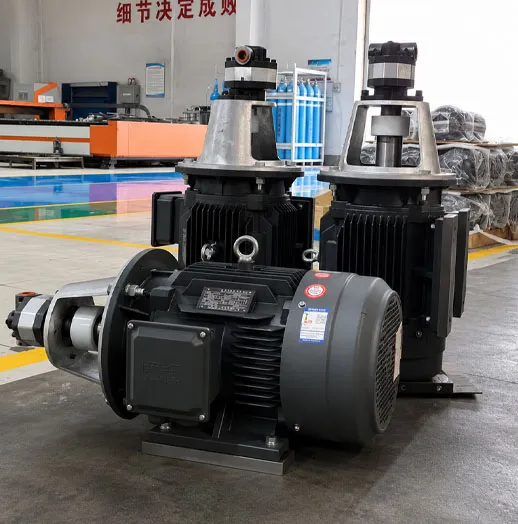
Baishicheng’s disclosed hydraulic power unit line covers air-driven units, the steelmaking-duty unit, air-cooled configurations, and customized HPUs engineered for specific machinery and industrial systems. Pressure, flow, motor power, tank volume, cooling configuration, and control logic are stated as customized to the application rather than published as a fixed numerical range. A buyer with a specific duty cycle and installation constraint should request the achievable specification for that application directly rather than assume a published standard exists.
Standard Configuration vs Fully Custom Build
| Factor |
Standard/Catalogue Configuration |
Custom-Engineered HPU |
| Lead time |
Typically shorter |
Depends on engineering and testing scope |
| Fit to unusual duty cycles |
May require oversizing to compensate |
Sized to the actual load and cycle |
| Upfront engineering cost |
Lower |
Higher, offset by avoiding oversizing waste |
| Best suited to |
Common, well-characterized applications |
Non-standard pressure, flow, or environmental requirements |
Compared with the type-and-sizing overviews already published by several hydraulic equipment sites, the harder question for most buyers isn’t which pump technology exists — it’s matching drive source, cooling method, and duty class to a specific installation, which is where a generic breakdown tends to stop short.
FAQ
Q: What’s the difference between an air-driven and an electric hydraulic power unit?
A: An air-driven unit converts compressed-air energy into hydraulic pressure instead of running an electric motor, which makes it suited to sites without adequate electrical infrastructure or where electrical ignition risk needs to be avoided; an electric unit is otherwise the simpler default.
Q: Does an air-cooled power unit work in hot ambient environments?
A: It can, but the heat exchanger has to work harder and typically needs more surface area to reject the same heat load, so high-ambient or continuous heavy-duty applications should have the cooling capacity verified against the actual duty cycle rather than assumed adequate.
Q: Is a bigger power unit always the safer choice if I’m unsure of my exact load?
A: No — an oversized pump or motor running below its efficient range wastes energy and generates excess heat at partial load, so sizing to a calculated or measured duty cycle is more reliable than sizing up as a guess.
Q: Can Baishicheng build a hydraulic power unit for steelmaking or another dedicated-duty application?
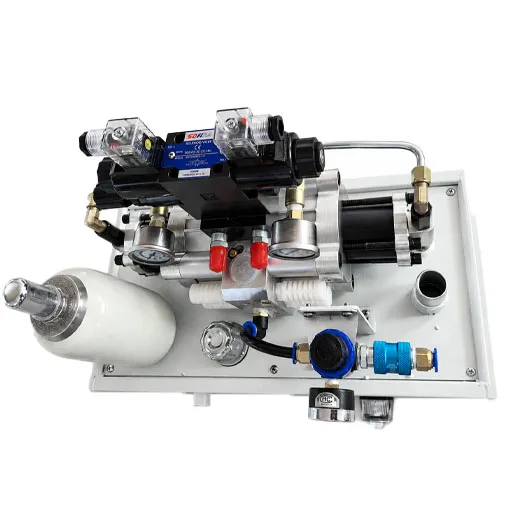
A: Baishicheng’s product line includes a hydraulic power unit specifically for steelmaking equipment, and other units are engineered for specific machinery and industrial systems. Confirm the achievable configuration and specification for a particular duty class directly with the engineering team.

 English
  Get a Quote


 September 14, 2026