Baishicheng Hydraulic Engineering Team | Technical Content Contributor | Published August 24, 2026
Specifying a custom hydraulic cylinder means defining bore, rod diameter, stroke, operating pressure, mounting style, load type, and material/seal requirements before requesting a quote. Skipping any of these — especially side load and pressure spikes — is the most common reason a custom cylinder order ends up reworked after commissioning.
What “Custom” Actually Means for a Hydraulic Cylinder
A catalog cylinder ships in a fixed bore/rod/stroke combination, with a standard mounting style and a general-purpose seal set. It works when your machine’s dimensions, environment, and duty cycle happen to fall inside that pre-set range. A custom cylinder starts from the other direction: your application’s dimensions, mounting structure, working conditions, and performance requirements define the design, not the other way around.
That’s not just a bore/stroke exercise. Two applications with identical bore and stroke can need completely different cylinders if one has a side load from an off-center push and the other doesn’t, or if one runs in a washdown environment and the other sits in a dry, climate-controlled shop. Compared with typical stock cylinder options, a custom build lets the material, seal compound, and mounting geometry follow the actual working conditions instead of forcing the application to work around a generic spec.
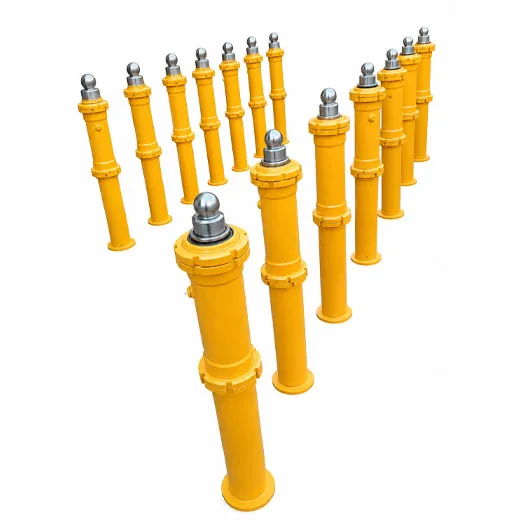
Nine Specs to Nail Down Before You Send an RFQ
A supplier can only quote as accurately as the information you give them. Before you send a request, have these ready:
- Bore diameter — sets force output; oversizing wastes flow and money, undersizing won’t hit the force you need.
- Rod diameter — sized against buckling risk on long strokes and against the maximum tension or compression the application applies.
- Stroke length — including any overtravel margin the machine actually needs.
- Operating pressure, including spikes — not just the nominal working pressure, but what happens at direction change or shock loading.
- Mounting style — flange, trunnion, clevis, tie-rod, and so on — and whether the mounting introduces side loads or bending moments.
- Load type — pure axial load versus any side load from misalignment. Side loads shorten seal life and can score or bend the rod over time.
- Barrel and rod material, plus surface treatment — standard carbon steel covers most dry, indoor applications; corrosive, humid, or washdown environments usually call for stainless steel or a specialized coating.
- Seal material and compatibility — matched to your hydraulic fluid type, working temperature range, and duty cycle.
- Port configuration and connection type — so the cylinder plumbs directly into your existing manifold or hose routing without adapters.
If you can hand a supplier all nine before the first call, you’ll get a quote that reflects the actual cylinder — not a placeholder that gets revised twice.
Baishicheng’s Custom Cylinder Lineup: What’s Actually Published
Baishicheng publishes five hydraulic cylinder lines: Custom Hydraulic Cylinders, Stainless Steel Hydraulic Cylinders, and three named series — HOB, MOB, and MOB Front Flange. Custom cylinders are designed to application-specific dimensions, mounting structures, working conditions, and performance requirements; the Stainless Steel line substitutes stainless components for standard carbon steel in corrosion- or moisture-exposed applications.
No single published bore, rod diameter, stroke, load, or pressure range covers all five lines — each is engineered or configured to the order. The company does disclose that specially engineered cylinders can be designed for ultra-high-pressure applications up to 120 MPa. That figure describes what’s possible for specific engineered cylinders, not the standard rating you should assume applies across the HOB, MOB, or general custom line by default — confirm the actual rating for your specific order.
| Dimension |
Catalog / Standard Cylinder |
Custom-Engineered Cylinder |
| Bore, rod, stroke |
Limited to the manufacturer’s pre-set combinations |
Sized to your calculated force, load, and installation envelope |
| Mounting style |
Fixed to what the series offers |
Matched to your machine’s frame and side-load conditions |
| Barrel/rod material |
Standard carbon steel in most catalog lines |
Can move to stainless steel or other treatments for corrosive or wet environments |
| Seals |
General-purpose compound for a typical fluid/temperature range |
Selected for your specific fluid, temperature, and duty cycle |
| Best fit |
Applications that match an existing series |
Applications where dimensions, environment, or duty cycle fall outside any published series |
When Does a Cylinder Actually Need Stainless Steel?
Not every corrosion concern justifies a full stainless build — that’s a real cost trade-off, not a default upsell. It’s worth it when the cylinder sits in continuous moisture exposure, sees regular washdown or cleaning-chemical contact, or operates in a humid or salt-air environment where a standard carbon-steel rod would pit or corrode over the service life you need. For dry indoor applications with only occasional splash exposure, a standard barrel with the right rod plating and seal compound is often enough, and it costs less.
The decision point is usually service life versus upfront cost: a stainless cylinder costs more to build, but a corroding rod eventually damages the seals it slides through, and a chronic leak is a more expensive problem than the material upgrade would have been. If your environment involves washdown, marine exposure, or aggressive cleaning chemicals, ask specifically about the stainless steel line rather than defaulting to a standard build and hoping the plating holds up.
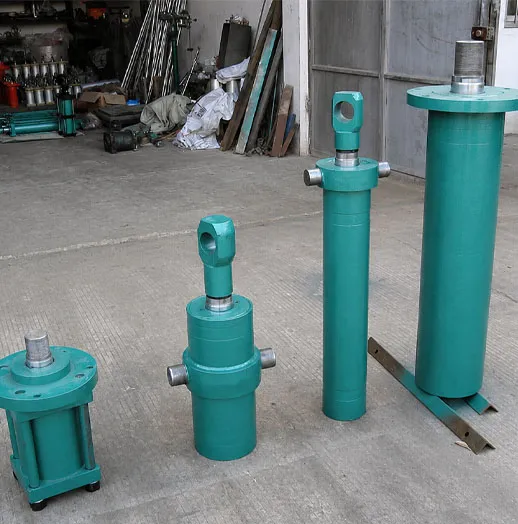
Mounting and Side Load: The Detail That Gets Skipped
Mounting style decides how load transfers into the machine frame, and it’s the spec most often treated as an afterthought. A pivot mount handles angular motion well but can introduce side loads the cylinder wasn’t designed for. A rigid flange mount resists bending moments but needs precise alignment during installation, or it introduces the same side-load problem from a different direction.
Side load matters because it’s cumulative damage, not a one-time failure. A slightly misaligned mount doesn’t usually break a cylinder on day one — it wears the rod bearing and scores the rod surface gradually, and by the time it shows up as a leak, the rod itself may need replacing, not just the seals. If your application has any unavoidable side load — scrapers, off-center pushes, plows — say so explicitly when you request a quote, so the supplier can size the rod bearing and, if needed, spec a larger rod or external guide support.
From Drawing to Test Bench: How a Custom Cylinder Order Gets Built
Baishicheng’s published manufacturing capability for cylinder production covers precision machining, cylinder honing to the specified bore tolerance, system assembly, and full operating-pressure and full-flow testing before shipment, with factory witness testing available if you want your own engineer present for the final check.
Cylinder honing in particular is worth asking a supplier about directly — the surface finish inside the barrel affects seal life on both ends of the spectrum. A finish that’s too rough accelerates seal wear; one that’s too fine wipes away the oil film the seal needs and can cause stick-slip motion. This is exactly the kind of detail that separates a supplier running standard production tolerances from one who treats each custom order as its own engineering task.
The Mistake That Turns a Custom Cylinder Order Into a Rework
The most common way a custom cylinder order goes wrong isn’t the bore or stroke number — it’s an unstated side load. Buyers frequently specify bore, rod diameter, stroke, and pressure accurately, then leave mounting and load type as an afterthought because the geometry “looks straightforward” on paper. The cylinder gets built to the stated axial load, and the side load introduced by the actual mounting only shows up as premature seal wear and rod scoring once it’s in service.
A second, related mistake is assuming a supplier’s headline capability applies to every cylinder they sell. Baishicheng’s 120 MPa ultra-high-pressure figure describes what its engineering team can design for specially engineered cylinders — it is not the standard rating of the HOB, MOB, or general custom line by default. Treating a maximum capability as a baseline spec is a fast way to either over-order pressure rating you don’t need, or assume coverage on a different product line that hasn’t been confirmed for your specific order.
Pricing: Why Bore and Stroke Alone Won’t Get You a Number
Baishicheng doesn’t publish a price list or a per-series price range for custom hydraulic cylinders, because cost depends on the full spec — bore, rod diameter, stroke, pressure rating, mounting style, material and surface treatment, and seal selection — not just bore and stroke in isolation. Two cylinders with identical bore and stroke can price very differently once one adds a stainless barrel or a larger rod for side-load resistance. Expect a legitimate quote to start with the nine specs above rather than a number pulled from bore size alone.
FAQ
Q: What’s the real difference between a catalog cylinder and a custom cylinder?
A: A catalog cylinder is built to a fixed bore/rod/stroke/mounting combination; a custom cylinder is designed from your application’s actual dimensions, mounting structure, working conditions, and performance requirements.
Q: What information do I need before requesting a quote?
A: The nine specs covered above — bore, rod diameter, stroke, operating pressure including spikes, mounting style, load type, barrel/rod material, seal compatibility, and port configuration.
Q: Does Baishicheng make cylinders for corrosive or washdown environments?
A: Yes — the Stainless Steel Hydraulic Cylinders line substitutes stainless components for standard carbon steel in corrosion- or moisture-exposed applications.
Q: What’s the highest pressure a custom cylinder can be built for?
A: Baishicheng states an engineering capability up to 120 MPa for specially engineered cylinders. This applies to specific engineered orders, not as the standard rating across every cylinder line.
Q: Are Baishicheng’s cylinders certified?
A: The company holds a company-level ISO 9001:2015 quality-management certificate (2022–2025 period, confirm current status directly) and CNIPA utility model patents covering specific cylinder features. Neither is a certification for a specific product series.
Q: How is cylinder pricing determined?
A: Project by project, based on the full spec — bore, rod, stroke, pressure, mounting, material, and seals — not on bore or stroke alone. No standard price list is published.
About the Author
This guide was produced by the Baishicheng Hydraulic Engineering Team, which supports the design, manufacture, testing, and commissioning of custom hydraulic cylinders, hydraulic power units, hydraulic systems, and automation-integrated industrial equipment. The team’s engineering scope covers hydraulics, pneumatics, PLC automation, servo drives, variable-frequency drives, and mechanical integration. Baishicheng Hydraulic was founded in 1995 and has more than 30 years of company-level hydraulic engineering and manufacturing experience — presented here as company and team experience, not the personal history of an individual author.

 English
  Get a Quote


 August 24, 2026