Baishicheng Hydraulic Engineering Team | Technical Content Contributor | Published September 2026
A hydraulic system built for metallurgical equipment has to hold pressure through repeated high-load cycles while sitting near radiant heat from furnaces or forming processes, which pushes fluid selection, seal material, filtration, and cooling well past what a standard industrial hydraulic spec assumes.
Why Metallurgical Duty Breaks Standard Hydraulic Assumptions
Most industrial hydraulic guidance assumes moderate ambient temperature, relatively steady load, and a fluid environment reasonably free of abrasive particulate. Metallurgical equipment violates all three at once. Furnace-adjacent systems run near radiant heat that a control cabinet across the shop floor never sees. Forging and forming presses apply load in sharp, repeated spikes rather than a steady hold. Graphite, scale, and metal fines drift into hydraulic reservoirs and filters far more aggressively than in a clean-room or general assembly environment.
None of this means metallurgical hydraulics require exotic engineering. It means the standard assumptions built into an off-the-shelf hydraulic package usually need to be re-checked, one by one, against the actual duty the system will see — not accepted because the catalog spec looked adequate on paper.
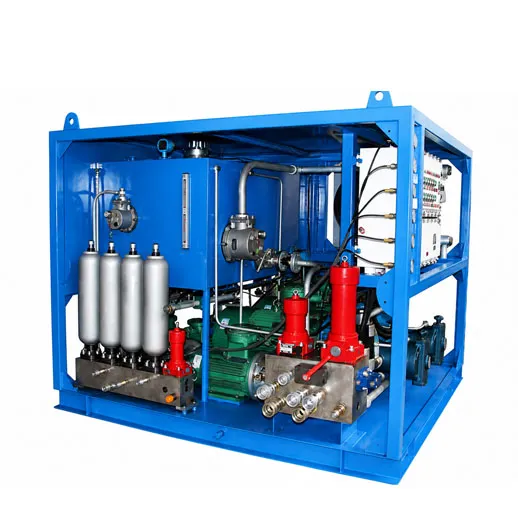
Heat Management Comes Before Everything Else
Hydraulic fluid viscosity drops as temperature rises, and a fluid that behaves correctly at room temperature can thin out enough near a furnace or hot-process line to affect lubrication and control response. Two things typically change first in a metallurgical-duty design: the fluid itself, and the cooling path.
Fire-resistant hydraulic fluids are commonly specified wherever a system sits close to open flame, molten material, or radiant heat sources, since a mineral-oil-based fluid presents a real ignition risk in that environment that a fire-resistant formulation is built to reduce. Cooling typically shifts from passive air cooling to a dedicated heat exchanger, sized against the system’s actual heat load rather than a generic industrial default, because a marginal cooling circuit that works fine in a machine shop can run hot enough near a furnace to shorten seal and fluid life significantly.
Seal material selection follows the same logic. Standard nitrile (NBR) seals handle general industrial temperature ranges well but degrade faster under sustained heat exposure than fluorocarbon (FKM/Viton) seals, which is why FKM is the more common choice for cylinders and valves operating in continuous proximity to a heat source.
How Does Load Behave in a Furnace or Forging Cycle?
Metallurgical loads rarely look like a smooth ramp. A forging press applies a sharp pressure spike at the moment of impact, holds briefly, then releases — repeated hundreds or thousands of times per shift. A furnace electrode-positioning system applies a different pattern: lower peak force, but a need for precise, repeatable positioning under sustained mechanical load as electrode sections advance and adjust.
Both patterns put more fatigue stress on pumps, valves, and hoses than a steady industrial load profile does. A pump sized only for average flow, without margin for the pressure spikes and rapid direction changes of a press cycle, tends to show wear and control drift well before its rated service life. Counterbalance and load-holding valves matter more here than in steady-load applications, since a load that has to be held stationary partway through a cycle — a raised electrode section, a partially closed press — needs a circuit that holds position reliably without drift if a supply line pressure momentarily dips.
Selecting Components for High-Heat, High-Load Duty
| Design Dimension |
Standard Industrial System |
Metallurgical-Duty System |
| Hydraulic fluid |
General mineral-oil-based fluid |
Fire-resistant fluid common near heat/flame exposure |
| Seal material |
NBR typically adequate |
FKM/Viton preferred for sustained heat exposure |
| Cooling |
Passive or minimal active cooling |
Dedicated heat exchanger sized to actual heat load |
| Filtration |
Standard filtration for general debris |
Finer filtration against scale, graphite, or metal fines |
| Load pattern |
Relatively steady |
Cyclical spikes with load-holding requirements |
Before finalizing a component list for metallurgical duty, it helps to work through a short check rather than default to the catalog spec that shipped with a similar-looking machine:
- Confirm the actual peak temperature the system will see at its closest point to the heat source, not the ambient shop temperature.
- Select fluid and seal materials against that peak figure, not the average.
- Size the cooling circuit against calculated heat load, including heat picked up from the process environment, not only from the hydraulic work itself.
- Specify filtration fine enough for the specific contaminant — graphite dust and forging scale behave differently and may call for different filter ratings.
- Confirm counterbalance or load-holding valve requirements for any function that must hold position mid-cycle.
The Mistake That Shortens System Life: Copying a Standard Industrial Spec
The most common shortcut on metallurgical projects is reusing a hydraulic spec from a general industrial application and assuming it will hold up because the pressure and flow numbers look similar on paper. Pressure and flow are only two of the variables that matter. A system correctly sized for pressure and flow but built with standard seals and passive cooling will often still fail early near a furnace, not because the hydraulics were undersized, but because the thermal and contamination environment was never accounted for in the first place.
This is not a case where every advantage of a metallurgical-duty design comes with an equally sized drawback. Fire-resistant fluid and finer filtration cost more upfront and require closer maintenance attention; that is a real tradeoff worth planning for, not one that cancels out the reliability gained by matching the design to the actual operating environment.
Where This Gets Specific to Your Project
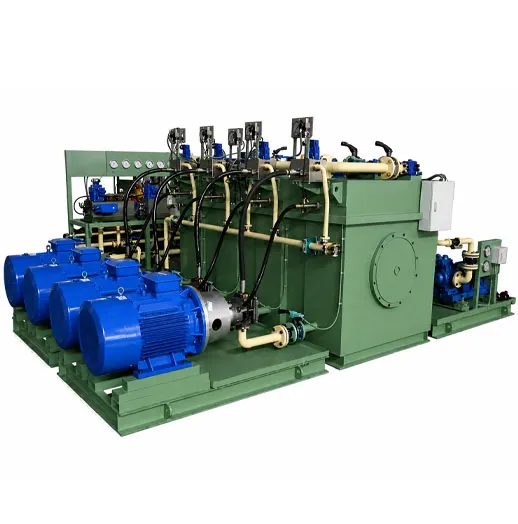
Baishicheng’s Custom Industrial Hydraulic Systems catalog lists Forging Press Hydraulic System and Graphite Electrode Internal String Furnace Hydraulic System among its published application types for heavy-industrial and metallurgical equipment, alongside systems for copper tube riveting, chain riveting, and general metallurgical equipment. As with the company’s other custom systems, no standard numerical pressure, flow, or tank-capacity range is published for this application family, since each system is engineered to the specific furnace, press, or line it serves; buyers should confirm exact figures directly for their project rather than assume a published default exists.
For applications requiring pressure well above conventional hydraulic ranges, Baishicheng also lists engineering capability up to 120 MPa, scoped to specially engineered systems and cylinders for designated ultra-high-pressure applications rather than the standard rating of a metallurgical system as a category.
FAQ
Why do metallurgical hydraulic systems need fire-resistant fluid instead of standard mineral oil?
Systems positioned close to furnaces, molten material, or other radiant heat sources carry a real ignition risk with standard mineral-oil-based fluid, which fire-resistant fluid formulations are specifically built to reduce.
How does a forging press load cycle differ from a steady industrial hydraulic load?
A forging press applies a sharp pressure spike at the moment of impact and releases shortly after, repeated continuously through a shift, which puts more fatigue stress on pumps, valves, and hoses than the steady load pattern common in general industrial equipment.
What filtration level is appropriate for a hydraulic system near graphite or forging scale?
Filtration for metallurgical-duty systems is generally set finer than standard industrial filtration and matched to the specific contaminant present, since graphite dust and forging scale do not behave identically in a reservoir or filter element.
Is Baishicheng’s 120 MPa capability standard for metallurgical hydraulic systems?
No — that figure applies to specially engineered systems and cylinders built for designated ultra-high-pressure applications, not the standard operating pressure of a typical metallurgical system, which is set from the actual process requirement instead.

 English
  Get a Quote


 September 05, 2026